
Digital Transformation for the Development of a Circular Economy in Tourism
Scientific Supervisor: Samalgul Tleugeldinovna Nasanbekova
Competition Name: Ministry of Science and Higher Education of the Republic of Kazakhstan, Grant Funding Program for Young Scientists “Zhas Galym”, 2022–2024 (32 months)
Competition Name: Ministry of Science and Higher Education of the Republic of Kazakhstan, Grant Funding Program for Young Scientists “Zhas Galym”, 2022–2024 (32 months)
Project Objective
The goals and scope of the research are focused on identifying the necessary digital solutions for the transition to a circular economy in tourism.
Research Tasks:
— Development of a framework that enables the identification of requirements for digital solutions necessary for transitioning to a circular development strategy in tourism;
— Consolidation and further development of the framework to analyze gaps in the application of digital solutions for building circular business models, and creation of a roadmap for implementing “smart” circular strategies in tourism;
— Development of mechanisms and identification of institutional changes required for implementing digital solutions in the transition to a circular economy in tourism.
Research Tasks:
— Development of a framework that enables the identification of requirements for digital solutions necessary for transitioning to a circular development strategy in tourism;
— Consolidation and further development of the framework to analyze gaps in the application of digital solutions for building circular business models, and creation of a roadmap for implementing “smart” circular strategies in tourism;
— Development of mechanisms and identification of institutional changes required for implementing digital solutions in the transition to a circular economy in tourism.
Relevance
Kazakhstan has joined all major international frameworks related to the United Nations Sustainable Development Goals. Today, one of the key paradigms of sustainable development is the transition to a circular economy. In this context, tourism, as one of the priority sectors of development in Kazakhstan and closely interconnected with many other industries, plays an important role in this transition.
However, for policymakers, aligning long-term sustainable development goals with short-term business interests remains a complex challenge. In this context, and according to research in this field, digital solutions can act as key catalysts for the transition to a circular and sustainable economy. Digital transformation and integration into digital ecosystems are core priorities of Industry 4.0. Nevertheless, most existing studies focus on digital solutions for industrial sectors, manufacturing, and production services.
Considering that the tourism industry is one of the largest globally and is interconnected with many sectors, research on digital solutions necessary for achieving economically and environmentally sustainable tourism development is of high importance. This is relevant not only for researchers from various disciplines, but also for policymakers, tourism practitioners, local communities, and other stakeholders.
The goals and scope of this research are focused on identifying digital solutions that facilitate and support the transition of tourism toward a circular economy.
However, for policymakers, aligning long-term sustainable development goals with short-term business interests remains a complex challenge. In this context, and according to research in this field, digital solutions can act as key catalysts for the transition to a circular and sustainable economy. Digital transformation and integration into digital ecosystems are core priorities of Industry 4.0. Nevertheless, most existing studies focus on digital solutions for industrial sectors, manufacturing, and production services.
Considering that the tourism industry is one of the largest globally and is interconnected with many sectors, research on digital solutions necessary for achieving economically and environmentally sustainable tourism development is of high importance. This is relevant not only for researchers from various disciplines, but also for policymakers, tourism practitioners, local communities, and other stakeholders.
The goals and scope of this research are focused on identifying digital solutions that facilitate and support the transition of tourism toward a circular economy.
Expected Results
From a theoretical and methodological perspective, this research will contribute to consolidating knowledge on the potential of digital technologies in the transition to circular and sustainable development models in tourism. It will also identify research gaps and define requirements for the development of new or modification of existing digital solutions in this field.
The practical significance of the study lies in the development of a roadmap and recommendations for policymakers and practitioners in tourism and sustainable development. The obtained results can serve as a structural model for implementing digital solutions in the creation of circular development models in tourism. In addition, the developed framework will be used in practice to assess gaps in existing digital solutions during the transition to circularity in tourism. The analysis of necessary institutional changes will provide a basis for decision-making by policymakers and tourism organization managers.
This research will contribute to promoting the transition to a circular economy as a key paradigm of sustainable development. The creation and implementation of circular models in tourism using digital solutions represent a direct contribution to achieving the United Nations Sustainable Development Goals.
Planned research outputs:
— publication of two articles in scientific journals indexed in the Social Sciences Citation Index (Web of Science) or with a CiteScore percentile of at least 35 in Scopus;
— publication of one article in a national journal recommended by the Committee for Quality Assurance in Science and Higher Education of the Republic of Kazakhstan;
— publication of one monograph.
The practical significance of the study lies in the development of a roadmap and recommendations for policymakers and practitioners in tourism and sustainable development. The obtained results can serve as a structural model for implementing digital solutions in the creation of circular development models in tourism. In addition, the developed framework will be used in practice to assess gaps in existing digital solutions during the transition to circularity in tourism. The analysis of necessary institutional changes will provide a basis for decision-making by policymakers and tourism organization managers.
This research will contribute to promoting the transition to a circular economy as a key paradigm of sustainable development. The creation and implementation of circular models in tourism using digital solutions represent a direct contribution to achieving the United Nations Sustainable Development Goals.
Planned research outputs:
— publication of two articles in scientific journals indexed in the Social Sciences Citation Index (Web of Science) or with a CiteScore percentile of at least 35 in Scopus;
— publication of one article in a national journal recommended by the Committee for Quality Assurance in Science and Higher Education of the Republic of Kazakhstan;
— publication of one monograph.
Research Team Members
Samalgul Tleugeldinovna Nasanbekova, Project Leader, PhD, Assistant Professor
h-index: 2
Scopus Author ID: 57194567941
ORCID ID: 0000-0002-5669-2718
Web of Science Researcher ID: ABG-9535-2021
Maribel Rodriguez-Zapatero, Scientific Consultant, PhD, Professor at the University of Córdoba (Spain)
h-index: 2
ORCID ID: 0000-0003-0335-8393
Web of Science Researcher ID: ABE-9769-2021
Scopus IDs: 57195307010, 57217653304
LinkedIn: linkedin.com/in/maribel-rodriguez-zapatero-8ba96b5a
Corporate website: catedraprasa.com
h-index: 2
Scopus Author ID: 57194567941
ORCID ID: 0000-0002-5669-2718
Web of Science Researcher ID: ABG-9535-2021
Maribel Rodriguez-Zapatero, Scientific Consultant, PhD, Professor at the University of Córdoba (Spain)
h-index: 2
ORCID ID: 0000-0003-0335-8393
Web of Science Researcher ID: ABE-9769-2021
Scopus IDs: 57195307010, 57217653304
LinkedIn: linkedin.com/in/maribel-rodriguez-zapatero-8ba96b5a
Corporate website: catedraprasa.com
Intermediate Results
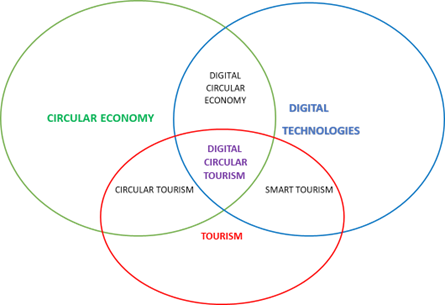
FRAMEWORK OF DIGITAL TECHNOLOGY AND CIRCULAR ECONOMY IN TOURISM
Calendar Plan and Work Completed under the Project for 2022
| № | Selection of literature and conducting a systematic literature review of scientific publications and leading practices and case studies on the application of digital technologies in building a circular tourism model. | May 2022 | August 2022 | A literature review was conducted and a theoretical background for the research was developed. |
|---|---|---|---|---|
| 1 | Systematic literature analysis using software tools (VOSviewer). Development of research methodology for primary data collection (research design) and preparation of a field research plan. | September 2022 | December 2022 | Published article: Nassanbekova, S., Yeshenkulova, G. (2022). Mapping Analysis of the Research Trends on Digital Technologies and Circular Economy in Tourism. Journal of Environmental Management and Tourism, Volume XIII, Winter, 7(63): 2048–2057. DOI: 10.14505/jemt.v13.7(63).24 (percentile: 53). Conference publication: Nassanbekova, S., Yeshenkulova, G., Ibadildin, N. (2022). The Role of 7P’s of Marketing in the Digital Strategies of Kazakh Tourism Destinations. In: Proceedings of the 7th International Conference on Digital Technologies in Education, Science and Industry (DTESI 2022), October 20–21, Almaty, Kazakhstan, pp. 442–450. |
Calendar Plan and Work Completed under the Project for 2023
| № | Conducting field research in the form of expert interviews (policymakers, practitioners from ICT, economics, tourism, etc.) for primary data collection. | January 2023 | April 2023 | Preparatory work for primary data collection using expert interviews was carried out. A pool of experts meeting the research criteria was selected, an interview structure and consent forms for participation were developed. A total of 12 expert interviews were conducted. |
|---|---|---|---|---|
| 1 | Data analysis was conducted (transcription, coding, interpretation, validation), and the research results were written in the form of a scientific article. | May 2023 | December 2023 | Participation in the international scientific conference “43rd Eurasian Business and Economic Society” in Madrid, Spain. A research abstract was published in the conference proceedings. The article “The role of DT in transition to circular economy in tourism” was submitted for review to the journal Information Technology & Tourism. Work is ongoing. |