Development of intercultural citizenship in the context of the internationalization of higher foreign language education of the Republic of Kazakhstan
Competition name:
Zhas galym 2022-2024, MSHE RK
Project coordinator:
Gerfanova E.F., PhD, assistant professor, Department of General Education Disciplines, Astana IT University
Researcher ID Web of Science – U-9370-2017
ORCID – 0000-0003-4581-5222
Scopus ID – 57205318974
Foreign research advisor:
Nemtchinova Ye.M., PhD, professor, Seattle Pacific University (USA)
ORCID https://orcid.org/0000-0002-7297-925X
Scopus ID 12798490100
Total amount financed:
17 636 050 tenge
Project coordinator:
Gerfanova E.F., PhD, assistant professor, Department of General Education Disciplines, Astana IT University
Researcher ID Web of Science – U-9370-2017
ORCID – 0000-0003-4581-5222
Scopus ID – 57205318974
Foreign research advisor:
Nemtchinova Ye.M., PhD, professor, Seattle Pacific University (USA)
ORCID https://orcid.org/0000-0002-7297-925X
Scopus ID 12798490100
Total amount financed:
17 636 050 tenge
Project aim
To develop and describe effective methods for the formation of intercultural citizenship of students in the context of the foreign language educational process of higher education in the Republic of Kazakhstan and the fostering of their intercultural understanding through the study of a foreign language and FL culture. Today, there can be traced actualization of intercultural education aimed, first of all, at deepening the knowledge of students about their native culture and culture of the country of the target language, which is necessary for full functioning in a modern multicultural society.
Objectives:
1. to determine the degree of development of the problem of the formation of intercultural citizenship in the context of foreign language education in domestic and foreign research literature;
2. to conduct a survey among students of Kazakhstani higher educational institutions who have experience of studying abroad in the framework of academic mobility programs and short-term internships, to identify the level of their intercultural experience, their understanding of the concept of intercultural citizenship;
3. to develop a model for the formation of intercultural citizenship of students in the context of higher foreign language education;
4. to probe the developed model of the formation of intercultural citizenship in the context of a real foreign language educational process of higher education in the Republic of Kazakhstan;
5. to develop guidelines for the formation of intercultural citizenship in the context of higher foreign language education in the Republic of Kazakhstan;
6. to present the results of the study in the form of publications, a training course, a textbook, a monograph and guidelines for teachers of a foreign language and culture.
Objectives:
1. to determine the degree of development of the problem of the formation of intercultural citizenship in the context of foreign language education in domestic and foreign research literature;
2. to conduct a survey among students of Kazakhstani higher educational institutions who have experience of studying abroad in the framework of academic mobility programs and short-term internships, to identify the level of their intercultural experience, their understanding of the concept of intercultural citizenship;
3. to develop a model for the formation of intercultural citizenship of students in the context of higher foreign language education;
4. to probe the developed model of the formation of intercultural citizenship in the context of a real foreign language educational process of higher education in the Republic of Kazakhstan;
5. to develop guidelines for the formation of intercultural citizenship in the context of higher foreign language education in the Republic of Kazakhstan;
6. to present the results of the study in the form of publications, a training course, a textbook, a monograph and guidelines for teachers of a foreign language and culture.
Expected results
The expected scientific and socio-economic effect is that the research conducted within the framework of the project will contribute to domestic science in terms of developing the problem of developing intercultural citizenship. The introduction of the model of formation of intercultural citizenship will help prepare students for their effective functioning in the modern global world, where intercultural understanding and intercultural sensitivity play an essential role. The results of the project will be reflected in the publication of articles in peer-reviewed foreign and (or) domestic publications recommended by the CQAFSHE MSHE RK, in a training course aimed at developing intercultural citizenship of students, as well as in a training manual, methodological recommendations for teachers and a monograph. The target consumers of the project results will be students and teachers of higher educational institutions, as well as researchers in the field of intercultural education
Current results
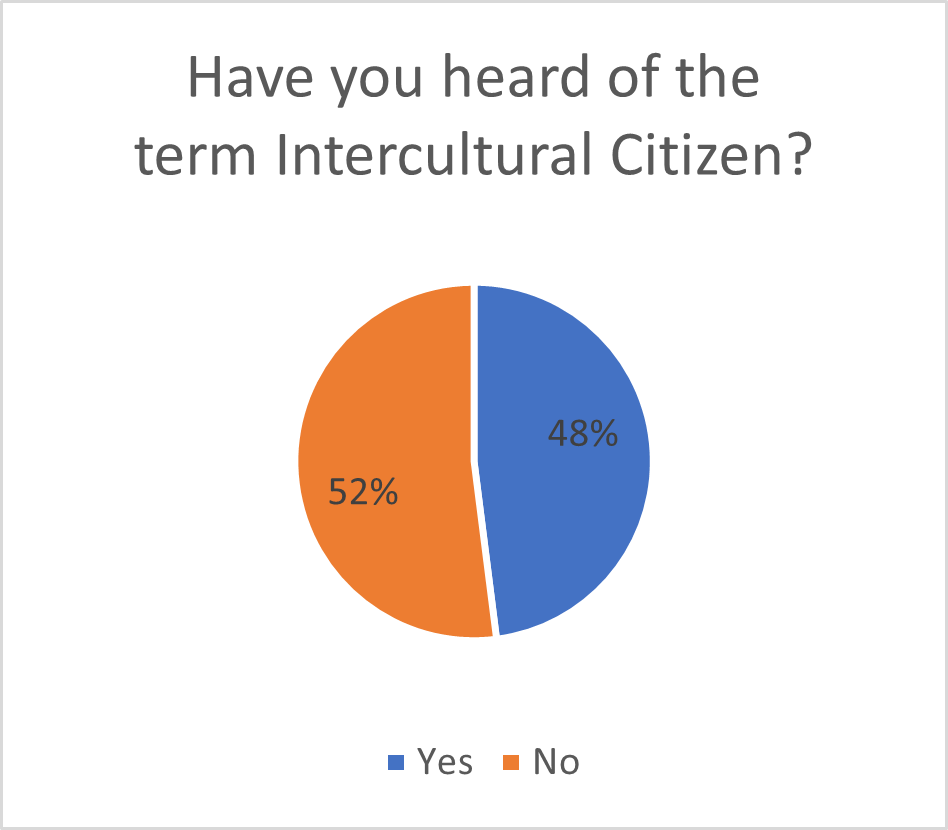
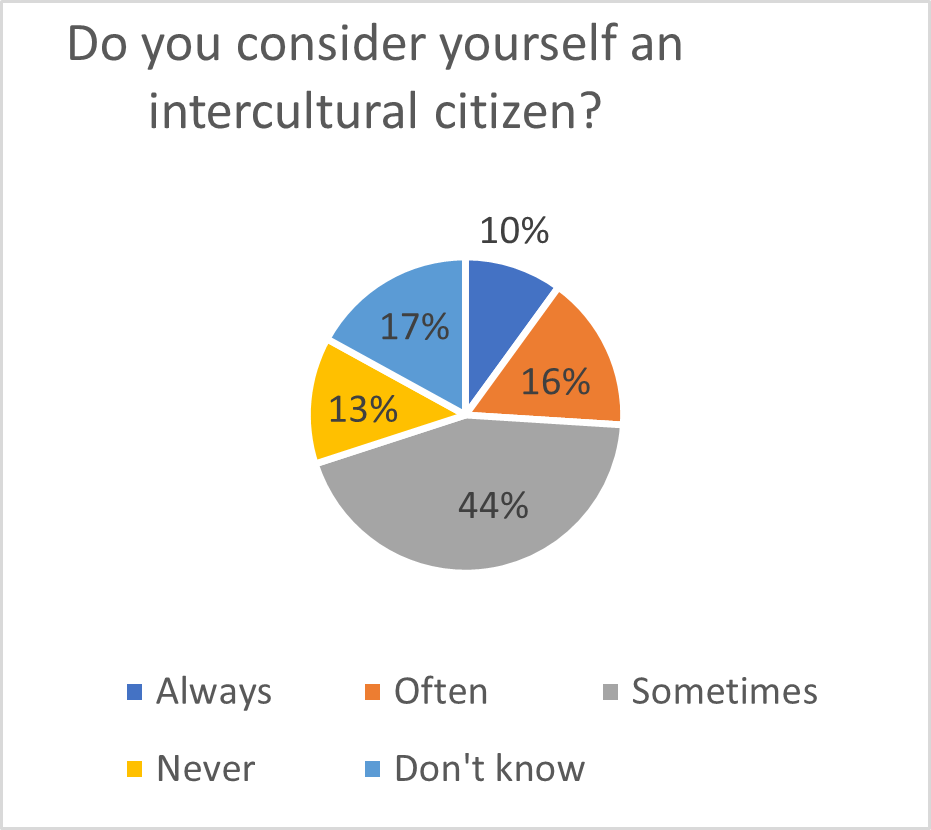
The results of a conducted survey, involving 407 students from Kazakhstani universities such as Astana IT University, Sh.Ualikhanov Kokshetau University, and S. Toraighyrov Pavlodar University, showed that the respondents generally held a positive attitude towards intercultural citizenship, and its key components were considered important by the participants. These components included language proficiency, cultural awareness, acceptance of diversity, tolerance, and respect for other cultures. However, the results also indicated that the students had a superficial understanding of intercultural citizenship, as their responses were limited to only some basic components of intercultural citizenship. Additionally, the participants experienced difficulties in describing the qualities and responsibilities of an “intercultural citizen”, which could be attributed to their lack of knowledge of the concept itself.