
Erasmus+ Alumni Meeting
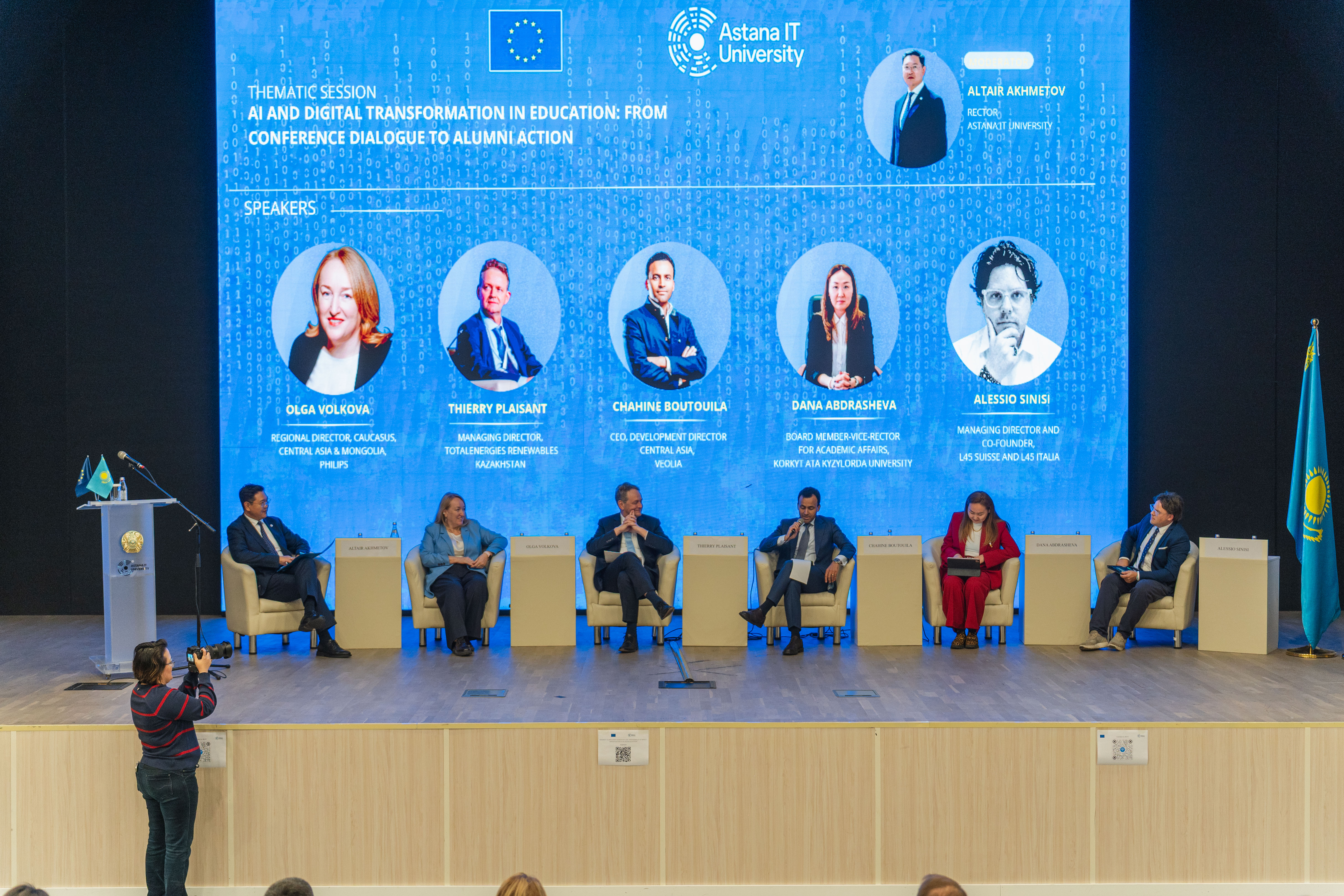
On 21 October, the Delegation of the European Union to the Republic of Kazakhstan, together with the National Erasmus+ Office in Kazakhstan and with the support of Astana IT University, organised a meeting of Erasmus+ alumni. Held under the theme “From Academic Mobility to Tangible Outcomes: Innovation and Artificial Intelligence in Higher Education,” the event brought together programme alumni from different regions of Kazakhstan. Participants shared their achievements, renewed professional connections, and exchanged experience.
The main purpose of the meeting was to discuss the impact of Erasmus+ on the academic and professional development of alumni, opportunities to apply the knowledge and skills acquired through international academic mobility, and prospects for further strengthening cooperation between higher education institutions in Kazakhstan and Europe. The event helped reinforce connections within the alumni community and create new opportunities for partnerships in higher education.
Aleška Simkić, Ambassador of the European Union to Kazakhstan, noted:
“Erasmus+ is one of the programmes of which the European Union is particularly proud. Its alumni clearly demonstrate that the European Union and Kazakhstan have enormous potential for exchanging experience, learning from one another, and implementing joint initiatives in a wide range of areas — from artificial intelligence to sustainable development, green technologies, and political science. The connections and partnership networks established through student exchanges and cooperation between universities contribute to mutual development, deeper understanding, and the creation of tolerant and prosperous societies.”
During the thematic session, participants discussed the impact of artificial intelligence on the higher education system. Particular attention was given to the potential use of AI to improve teaching and learning, increase the efficiency of university management, and address the ethical issues associated with its use. Participants also considered the impact of artificial intelligence on the labour market and the economy.
Comment from the Rector of Astana IT University:
“International cooperation is particularly important for a university focused on technological development and digital transformation. The Erasmus+ programme enables us to combine international academic exchange with such relevant areas as artificial intelligence, digital skills development, and the future of higher education. We are pleased to host the Erasmus+ Alumni Meeting at Astana IT University and to provide a platform where the experience gained through the programme can become the foundation for new partnerships, joint projects, and tangible outcomes for Kazakhstan’s higher education system.”
Comment from the Coordinator of the National Erasmus+ Office in Kazakhstan:
“The results of participation in Erasmus+ do not end when an academic mobility period or project is completed. Programme alumni and project participants return to Kazakhstan with new knowledge, skills, and international connections, contributing to the development of universities, research, innovation, and society as a whole. Our goal is to strengthen these connections and build an active alumni community capable of supporting new partnerships, mentoring future programme participants, and contributing to the development of Kazakhstan’s higher education system. This meeting is an important step towards bringing together the individual experiences of Erasmus+ participants to achieve more significant shared outcomes.”
The meeting once again highlighted the long-term value of Erasmus+ as an instrument for strengthening connections between Kazakhstan and Europe and developing people-to-people cooperation. Particular attention was given to the role of alumni in sharing knowledge and experience, discussing the potential applications of artificial intelligence, and shaping the future of the higher education system.