
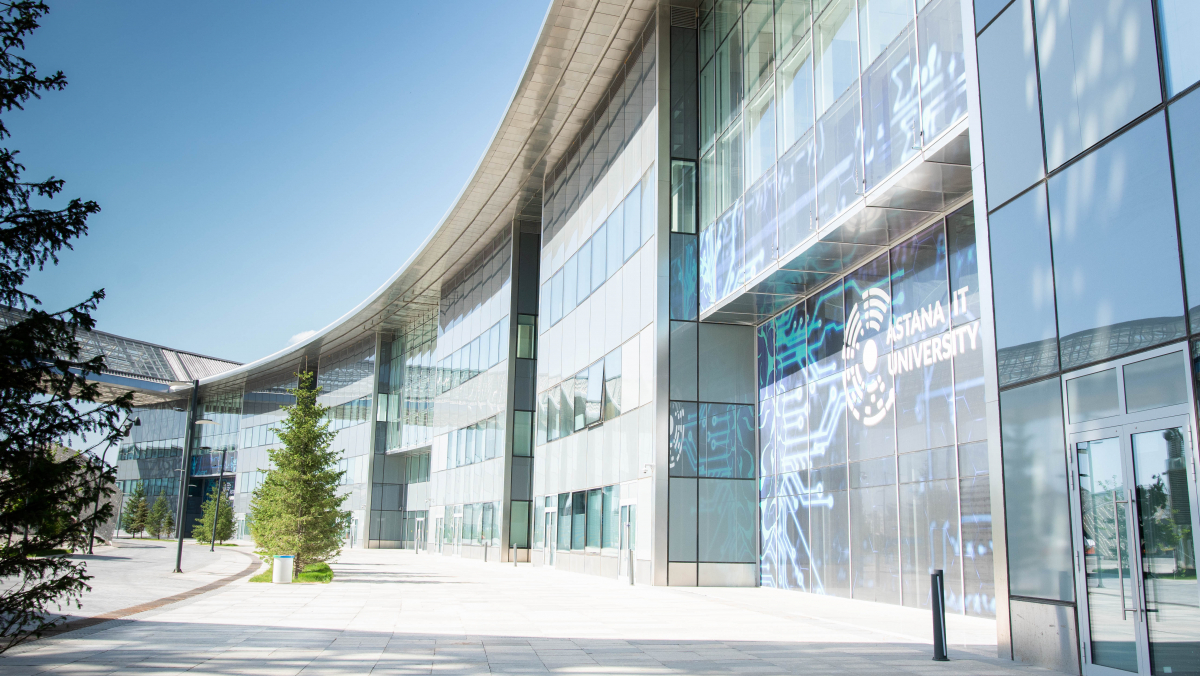
Industrial Internet of Things
6B07101 Industrial Internet of Things
Core subjects : mathematics, physics.
Threshold Score (Grant): 75.
Objective of EP
The purpose of the educational program is intensive practice-oriented training in the direction of the industrial Internet of Things for the development of complex Internet of Things systems including sensor-based data collection modules, signal/data conversion and processing modules, secure data transmission systems, algorithms for data collection, processing and storage on the server, data visualization technologies, and feedback systems, control and/or automation of the technological process. In addition, the EP is also focused on the construction of cyber-physical systems (digital twins), industrial storage and intelligent data processing.
List of a specialist’s positions
- Internet of Things Specialist;
- Electrical and/or Electronics Engineer;
- Hardware Engineer;
- Control Systems Engineer;
- Embedded Systems Engineer;
- Research Assistant;
- IoT Systems Software Engineer;
- Cloud IoT Systems Engineer;
- Robotics Engineer.
Learning outcomes of EP
- To be able to express ideas and arguments on the topic of information technology in writing and orally, speak to an audience and defend a point of view in the state, English and in the language of interethnic communication.
- Know the main classes of ICT systems, tasks and tools, understand the domain areas of their application and justify the choice when solving problems.
- Applies theoretical and practical knowledge of natural sciences, methods of mathematical analysis and modeling, theoretical and experimental research to solve educational, practical and professional problems.
- Is able to participate in the installation, commissioning, testing and commissioning of control and automation systems based on Internet of Things technologies, participate in the technological preparation of Internet of Things systems for various purposes and the principle of operation;
- Proficient in the main modern chemical, physical and mechanical, electron-optical methods used in the development of Internet of Things systems, both for household and industrial purposes.
- Has the skills of mathematical and cyber-physical modeling to build models of technological and production facilities, phenomena and systems, as well as descriptions of dynamic processes;
- Is capable of setting up, configuring and pilot testing of embedded systems in laboratory conditions and at production facilities;
- Is able to select typical sensors, embedded systems, data transmission, storage and visualization technologies for the design of a control system and/or automation of a technological process using the Internet of Things concept, as well as to pre-evaluate the economic efficiency of technological processes;
- Know electronic and mechanical devices (and their components) of the Industrial Internet of Things; understand the principles of their operation and operation, the technology of connection to the network and management, understand the issues of industrial safety and occupational safety at work;
- Applies knowledge and understanding at the professional level of the organization of the safety of the life of production personnel and the population, formulates arguments and solutions for their protection, including in the event of an emergency;
- Applies knowledge and understanding of facts, phenomena, theories and complex dependencies between them in the development of functional and structural schemes of complex systems of the Internet of Things for industrial purposes using standard computer design tools;
- Be able to design solutions for industrial Internet of Things systems, including the development of project documentation, the selection of the main nodes of complex industrial Internet of Things systems, the organization of information security protection;
- Have a systemic understanding of the role of individuals and events in shaping the current situation; the ability to critically evaluate and position actions regarding complex social processes in light of historical factors;
- To use a variety of physical activities to maintain and promote health in a meaningful way;
Group of educational programs
Awarded degree
Training period
Program Structure
CC – Compulsory Component
EC– Elective Component
Courses chosen by the student
| № | Course Cycle | Course Component | Course Code | Course Title | Academic Credits |
|---|---|---|---|---|---|
| 1 | GED | ЕС | TP 3113 | Technological Entrepreneurship | 5 |
| 2 | GED | EC | Pred 2116 | Entrepreneurship | 5 |
| 3 | GED | ЕС | Pred 2116 / TP 3113 | Financial Literacy | 5 |
| 4 | GED | Courses chosen by the student | DMCS1 | Digital Media, Culture and Society 1 | 5 |
| 5 | GED | Courses chosen by the student | DMCS2 | Digital Media, Сulturе and Society 2 | 5 |
| 6 | GED | Courses chosen by the student | FGL1 | Foreign (Gеrmаn) Language 1 | 5 |
| 7 | GED | Courses chosen by the student | FGL2 | Foreign (Gеrmаn) Language 2 | 5 |
| 8 | GED | Courses chosen by the student | FCL1 | Foreign (Chinese) Language 1 | 5 |
| 9 | GED | Courses chosen by the student | FCL2 | Foreign (Chinese) Language 2 | 5 |
| 10 | GED | Courses chosen by the student | FKL1 | Foreign (Korean) Language 1 | 5 |
| 11 | GED | Courses chosen by the student | FKL2 | Foreign (Korean) Language 2 | 5 |
| 12 | GED | СС | HSS 1122 HSS 1132 (Soz 2109) | Sociology | 2 |
| 13 | GED | СС | Fiz 1112 | Physical Education | 8 |
| 14 | GED | СС | HSS 1182 (MSP 2313) | Psychology | 2 |
| 15 | GED | СС | HSS1145 (SIK2022) | History of Kazakhstan | 5 |
| 16 | GED | СС | HSS 1132 MSP 2315 | Political Science | 2 |
| 17 | GED | СС | HSS 1162 Cult 1111 | Cultural Studies | 2 |
| 18 | GED | СС | K(R) Ya2105 K(R) Ya2106 | Kazakh (Russian) Language | 10 |
| 19 | GED | СС | Fil 2102 | Philosophy | 5 |
| 20 | GED | CC | K(R) Ya2105 | Kazakh (Russian) Language 1 | 5 |
| 21 | GED | СС | K(R) Ya2106 | Kazakh (Russian) Language 2 | 5 |
| 22 | GED | CC | HSS 1115 IYa 1103 | Foreign Language 1 | 5 |
| 23 | GED | CC | HSS 1215 FL2023 | Foreign Language 2 | 5 |
| 24 | GED | CC | IT1115 IKT 1105 | Information and Communication Technologies | 5 |
| 25 | GED | CC | Fiz 1113 | Physical Education | 2 |
| 26 | GED | СС | Fiz 1114 | Physical Education | 2 |
| 27 | GED | CC | Fiz 2116 | Physical Education | 2 |
| 28 | GED | СС | Fiz 1112 | Physical Education | 2 |
UC – University Component
EC – Elective Component
| № | Course Cycle | Course Component | Course Code | Course Title | Academic Credits |
|---|---|---|---|---|---|
| 1 | BD | UC | MATH 1115 MA1 1202 | Calculus 1 | 5 |
| 2 | BD | UC | MA2 1203 | Calculus 2 | 5 |
| 3 | BD | UC | MATH 2125 LA 1201 | Linear Аlgebra | 5 |
| 4 | BD | UC | MATH 2145 DM 2207 | Discrete mathematics | 5 |
| 5 | BD | UC | ViS2212 | Probability and Statistics | 5 |
| 6 | BD | UC | Ph1 | Physics 1 | 5 |
| 7 | BD | UC | Ph2 | Physics 2 | 5 |
| 8 | BD | UC | ICP | Introduction to Computing and Programming | 5 |
| 9 | BD | ЕС | ASiD 1205 | Algorithms and Data Structure | 5 |
| 10 | BD | UC | CS 3145 KSC 3216 | Computer Networks | 5 |
| 11 | BD | UC | OS 2207 | Operating Systems | 5 |
| 12 | BD | ЕС | VPC 1212 / CP | Introduction to Programmig (C++) / C programming | 5 |
| 13 | BD | UC | CT | Circuit Theory | 5 |
| 14 | BD | UС | Elt 2302 | Electronics | 5 |
| 15 | BD | UС | DLD5 | Digital Logic Design | 5 |
| 16 | BD | UC | PM | Microcontroller Programming | 5 |
| 17 | MD | UC | PVS 3307 | Embedded Systems Design | 5 |
| 18 | BD | ЕС | TES 2207 | Machine Learning Algorithms / Digital Signals Processing | 5 |
| 19 | BD | UC | CS1 | Control Systems 1 | 5 |
| 20 | BD | UC | CS2 | Controls Systems 2 | 5 |
| 21 | BD | ЕС | SiS 2303 | Signals and Systems | 5 |
| 22 | BD | UС | IC | Industrail Communication | 5 |
| 23 | BD | UС | AK 3221 | Academic Writing | 5 |
| 24 | НП | UC | MiII 3222 | Research Methods and Tools | 5 |
| 25 | BD | UC | UP SIS 1211 | Educational Practice | 2 |
UC – University Component
EC – Elective Component
| № | Course Cycle | Course Component | Course Code | Course Title | Academic Credits |
|---|---|---|---|---|---|
| 1 | MD | UC | EOS | Embedded Operating Systems | 5 |
| 2 | MD | ЕС | DBMS / MDP / IDT | Database Management Models and Systems / Mechanical Design and Prototyping / Introduction to Digital Twins | 5 |
| 3 | MD | ЕС | IA / IR | Cloud Computing / Industrial Automation / Introduction to Robotics | 5 |
| 4 | MD | UC | IS | Industrial Safety | 4 |
| 5 | MD | UC | SIoT | Sensors for IoT | 4 |
| 6 | MD | UC | NPIoT | Network Protocols for IoT | 5 |
| 7 | MD | UC | DIoT | Development of IoT Systems | 5 |
| 8 | MD | ЕС | CPIP / RMSD / IST | Cyber-Physical Modeling of Industrial Processes / Industrial Storage Technology / Robotic and Mechatronic System Design | 5 |
| 9 | MD | UC | PP 2305 | Industrial Practice | 4 |
| 10 | MD | UC | PP 3306 | Industrial Practice | 8 |
| 11 | МD | UC | PP 3307 | Undergraduate Practice | 4 |
| 12 | Qualification Examination | — | — | Writing Diploma Work (Project) and Defence / Comprehensive Examination | 8 |
Documents
Academic disciplines
Cycle of general education disciplines
Compulsory component
Cycle of general education disciplines
Elective component
Cycle of major disciplines
University’s component
Cycle of major disciplines
Elective component
Cycle of fundamental disciplines
University’s component
Cycle of fundamental disciplines
Elective component
Additional types of learning

Contacts
Admission Committee
+7 (7172) 64-57-10
info@astanait.edu.kz
Mon-Fri 9:00 – 18:00