
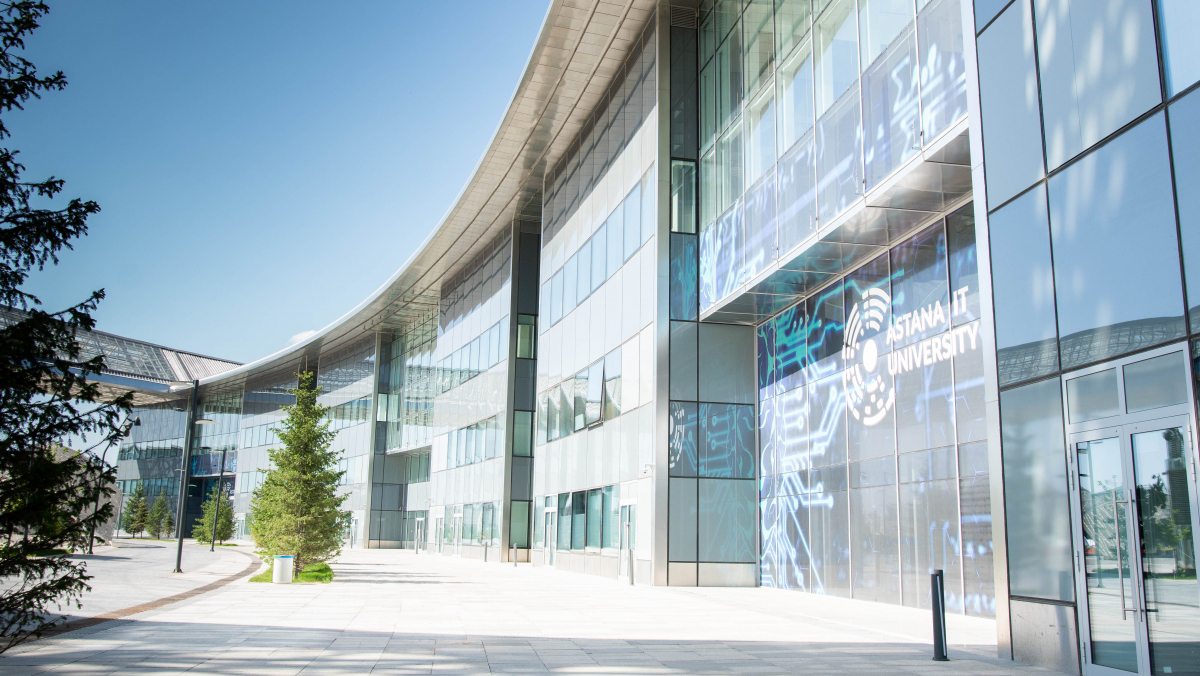
Electronic Engineering
6B07102 Electronic Engineering
Profile subjects: Mathematics, Physics.
Threshold Score (Grant): 75.
Objective of Educational Programm
The educational program is to train highly qualified specialists capable of developing and maintaining electronic systems, equipment and apparatuses for various functional purposes, relying on a solid foundation in the field of analog and digital electronics, nanoelectronics and microprocessor technology
List of a specialist’s positions
- Electronics Engineer
- Industrial Robotics Designer
- Internet of Things Specialist
- Electrical and/or Electronics Engineer
- Hardware Engineer
- Control Systems Engineer
- Embedded Systems Engineer
- Research Fellow
Learning outcomes
- To possess key mathematical tools and methods necessary for analysis, modeling and solving applied problems in the field of electrical engineering, electronics, automation and control
- To understand the basic physical laws and principles used in electrical and electronic engineering, are able to analyze and predict physical phenomena, including electrical, magnetic and optical effects, and to use these principles to solve practical problems.
- To know the properties of various materials and their applications in electrical and electronic engineering, are able to design and analyze electrical machines, and understand the principles of operation of various sensors and actuators.
- To understand the principles of operation and design of electrical systems and devices. To analyze and simulate electrical circuits, design and test analog and digital electronic devices.
- To develop a firmware for microcontrollers, design and integrate embedded systems, and are able to use operating systems specific to embedded systems.
- To analyze and process signals and systems in the time and frequency domains, to possess methods and tools for sampling, quantization, encoding and decoding signals. To apply these skills to design and implement digital filters, signal processing algorithms, and signal processing systems, and to analyze their performance and efficiency.
- To understand the architecture and functioning of computer systems, know the basics of designing and managing computer networks of various scales, as well as methods and technologies for creating integrated Internet of Things systems.
- To understand the principles of operation and design of automatic control systems, apply methods of analysis and synthesis of control in the state space, as well as methods of optimization and optimal control. By using modern mathematical and computer methods, to design and to adjust effective control systems for multidimensional and complex technical systems, ensuring their stability, reliability and optimal operation.
- To know the principle of operation of various semiconductor devices. To design and to develop semiconductor devices and nanoelectronic systems, and to apply optoelectronic principles to a variety of applications, including optical communications, sensors, and photovoltaic devices.
- To master the basic principles and methods of electronic circuit design, to have the skills to use specialized software for modeling and simulating electronic circuits, which allows them to check and analyze the operation of the circuit before hardware implementation.
- To prepare scientific reports, write research articles and technical reports, and conduct literature reviews and data analysis. To apply acquired knowledge and skills in practical projects, solve real-world problems, and demonstrate the ability to work independently and think creatively.
- To know methods of defining a business niche and conducting techno-economic analysis, commercializing technological solutions. To develop entrepreneurial thinking and management skills.
- Have a systemic understanding of the role of individuals and events in shaping the current situation; the ability to critically evaluate and position actions regarding complex social processes in light of historical factors
- To use a variety of physical activities to maintain and promote health in a meaningful way.
B063 – Electrical and Automation
Educational group
Educational group
Bachelor in engineering and technology in the educational program «6B07102 Electronic Engineering»
Awarded degree
Awarded degree
3 years
Duration of studies
Duration of studies
Program Structure
GED – General Education Disciplines
CC – Compulsory Component
EC– Elective Component
Courses chosen by the student
CC – Compulsory Component
EC– Elective Component
Courses chosen by the student
| № | Course Cycle | Course Component | Course Code | Course Title | Academic Credits |
|---|---|---|---|---|---|
| 1 | GED | ЕС | TP 3113 | Technological Entrepreneurship | 5 |
| 2 | GED | EC | Pred 2116 | Entrepreneurship | 5 |
| 3 | GED | ЕС | Pred 2116 / TP 3113 | Financial Literacy | 5 |
| 4 | GED | Courses chosen by the student | DMCS1 | Digital Media, Culture and Society 1 | 5 |
| 5 | GED | Courses chosen by the student | DMCS2 | Digital Media, Сulturе and Society 2 | 5 |
| 6 | GED | Courses chosen by the student | FGL1 | Foreign (Gеrmаn) Language 1 | 5 |
| 7 | GED | Courses chosen by the student | FGL2 | Foreign (Gеrmаn) Language 2 | 5 |
| 8 | GED | Courses chosen by the student | FCL1 | Foreign (Chinese) Language 1 | 5 |
| 9 | GED | Courses chosen by the student | FCL2 | Foreign (Chinese) Language 2 | 5 |
| 10 | GED | Courses chosen by the student | FKL1 | Foreign (Korean) Language 1 | 5 |
| 11 | GED | Courses chosen by the student | FKL2 | Foreign (Korean) Language 2 | 5 |
| 12 | GED | СС | HSS 1122 HSS 1132 (Soz 2109) | Sociology | 2 |
| 13 | GED | СС | Fiz 1112 | Physical Education | 8 |
| 14 | GED | СС | HSS 1182 (MSP 2313) | Psychology | 2 |
| 15 | GED | СС | HSS1145 (SIK2022) | History of Kazakhstan | 5 |
| 16 | GED | СС | HSS 1132 MSP 2315 | Political Science | 2 |
| 17 | GED | СС | HSS 1162 Cult 1111 | Cultural Studies | 2 |
| 18 | GED | СС | K(R) Ya2105 K(R) Ya2106 | Kazakh (Russian) Language | 10 |
| 19 | GED | СС | Fil 2102 | Philosophy | 5 |
BD – Basic Disciplines
UC – University Component
EC – Elective Component
UC – University Component
EC – Elective Component
| № | Course Cycle | Course Component | Course Code | Course Title | Academic Credits |
|---|---|---|---|---|---|
| 1 | BD | UC | NONE | Introduction to Computing and Programming | 5 |
| 2 | BD | UC | MATH 2145 DM 2207 | Discrete mathematics | 5 |
| 3 | BD | UC | MATH 1115 MA1 1202 | Calculus 1 | 5 |
| 4 | BD | UC | UP SIS 1211 | Educational Practice | 2 |
| 5 | BD | UC | MATH 1215 MA2 1203 | Calculus 2 | 5 |
| 6 | BD | UC | MATH 2125 LA 1201 | Linear Аlgebra | 5 |
| 7 | BD | UC | EEE 2145 DE | Digital Electronics | 5 |
| 8 | BD | UC | AE | Analog Electronics | 5 |
| 9 | BD | UC | FMS | Fundamentals of Materials Science | 5 |
| 10 | BD | ЕС | TES 2207 | Digital Signals Processing | 5 |
| 11 | BD | UC | MME | Mathematical Methods for Engineers | 5 |
| 12 | BD | UC | SUBD 2217 | Database Management Systems | 5 |
| 13 | BD | UС | AK 3221 | Academic Writing | 5 |
| 14 | BD | UC | CA | Computer Architecture | 5 |
| 15 | BD | UC | MiII 3222 | Research Methods and Tools | 5 |
| 16 | BD | ЕС | SiS 2303 | Signals and Systems | 5 |
| 17 | BD | UC | PM | Microcontroller Programming | 5 |
| 18 | BD | UC | — | Physics 1 | 5 |
| 19 | BD | UC | — | Physics 2 | 5 |
| 20 | BD | UC | — | Introduction to Computing and Programming | 5 |
| 21 | BD | UC | — | C++ Programming | 5 |
| 22 | BD | UC | — | Circuit Theory | 5 |
MD – Major Disciplines
UC – University Component
EC – Elective Component
UC – University Component
EC – Elective Component
| № | Course Cycle | Course Component | Course Code | Course Title | Academic Credits |
|---|---|---|---|---|---|
| 1 | MD | ЕС | VkK2302 | Power Electronics / Semiconductor Devices | 5 |
| 2 | MD | ЕС | null | Electronic circuit simulation | 4 |
| 3 | MD | ЕС | EM | Electrical Machines | 5 |
| 4 | MD | ЕС | N / IA | Nanoelectronics / Industrial Automation | 5 |
| 5 | MD | ЕС | OE | Optoelectronics | 4 |
| 6 | MD | ЕС | DPCB | Design of
Printed
Circuit
Boards | 4 |
| 7 | MD | UC | CS 3145 KSC 3216 | Computer Networks | 5 |
| 8 | MD | UC | PP 2305 | Industrial Practice | 4 |
| 9 | МD | UC | PP 3307 | Undergraduate Practice | 4 |
| 10 | MD | UC | PP 3306 | Industrial Practice | 8 |
| 11 | MD | UC | IES | Embedded Systems Design | 5 |
| 12 | MD | UC | — | Embedded Operating Systems | 5 |
| 13 | MD | ЕС | — | Control Systems 1 | 5 |
| 14 | MD | UC | — | Electrical Measurements and Instrumentation | 5 |
| 15 | MD | ЕС | — | Control Systems 2 | 5 |
| 16 | MD | ЕС | — | Optimization and Optimal Control | 5 |
| 17 | MD | UC | — | Introduction to Robotics | 5 |
| 18 | BD | UC | — | Robotic and Mechatronic System Design | 5 |
| 19 | MD | UC | — | Industrial Safety | 4 |
Documents
Academic disciplines
Cycle of general education disciplines
Compulsory component / University’s component
Elective component
Cycle of fundamental disciplines
University’s component
Cycle of major disciplines
University’s component
Cycle of major disciplines
Elective component
Additional types of learning

Contacts
Admission Committee
+7 (7172) 64-57-10
info@astanait.edu.kz
Mon-Fri 9:00 – 18:00