
«Hybrid Modeling of the Energy System for Developing a Roadmap for Renewable Energy in Kazakhstan with High Spatial, Temporal, and Technical Disaggregation»
Project Objective
Development of an integrated hybrid modeling tool for the energy system, incorporating a long-term energy system planning model and an operational electricity system model; development of a roadmap for renewable energy development up to 2030 and 2050, aligned with optimal operational parameters ensuring the reliability, economic efficiency, and environmental sustainability of the energy system.
The main outcome of this research is a renewable energy roadmap for Kazakhstan, including data on optimal geographical placement, construction timelines, and investment volumes, taking into account the renewable energy potential and energy demand of each region. This study will involve linking the long-term TIMES/MARKAL model of Kazakhstan’s energy system with the operational electricity market model ELMOD. The final integrated tool will be used to develop the country’s renewable energy roadmap. The developed tool will serve as a decision-support system for energy planning and will be of interest to decision-makers such as the Ministry of Energy of the Republic of Kazakhstan, JSC “Zhasyl Damu”, JSC “KEGOC”, “Samruk-Energo”, and others. The developed integrated tool can also be applied to other energy and environmental strategies.
The main outcome of this research is a renewable energy roadmap for Kazakhstan, including data on optimal geographical placement, construction timelines, and investment volumes, taking into account the renewable energy potential and energy demand of each region. This study will involve linking the long-term TIMES/MARKAL model of Kazakhstan’s energy system with the operational electricity market model ELMOD. The final integrated tool will be used to develop the country’s renewable energy roadmap. The developed tool will serve as a decision-support system for energy planning and will be of interest to decision-makers such as the Ministry of Energy of the Republic of Kazakhstan, JSC “Zhasyl Damu”, JSC “KEGOC”, “Samruk-Energo”, and others. The developed integrated tool can also be applied to other energy and environmental strategies.
To achieve the project objectives, the following tasks must be carried out:
Task 1. Updating the long-term energy system model.
Task 2. Development of an operational electricity system model with high spatial, temporal, and technical disaggregation.
Task 3. Linking the modeling tools.
Task 4. Development of a renewable energy roadmap for Kazakhstan.
Task 5. Sensitivity analysis and uncertainty assessment.
Task 1. Updating the long-term energy system model.
Task 2. Development of an operational electricity system model with high spatial, temporal, and technical disaggregation.
Task 3. Linking the modeling tools.
Task 4. Development of a renewable energy roadmap for Kazakhstan.
Task 5. Sensitivity analysis and uncertainty assessment.
Project Relevance
Electricity generation from renewable energy sources is inherently intermittent, location-specific, and only partially predictable. The variability of renewable energy sources, such as wind and solar power, introduces significant fluctuations and uncertainty into the planning and operation of the energy system, which may affect its reliability. The reliability of an energy system mainly consists of security and adequacy. An energy system is considered secure if it can withstand the loss (or potential multiple losses) of key system components, such as generators or transmission lines. An energy system is adequate if there is sufficient installed capacity to meet demand.
The integration of higher shares of variable renewable energy requires transformation of electricity markets in many aspects, with a key element being the adaptation of operational management methods. Without careful long-term and operational planning, the integration of a high share of renewable energy may negatively affect system reliability and lead to a significant increase in electricity generation costs due to variable expenses.
The main hypothesis of this study is that hybrid models provide a comprehensive representation of possible energy system development scenarios by considering intertemporal, interregional, and intersectoral linkages.
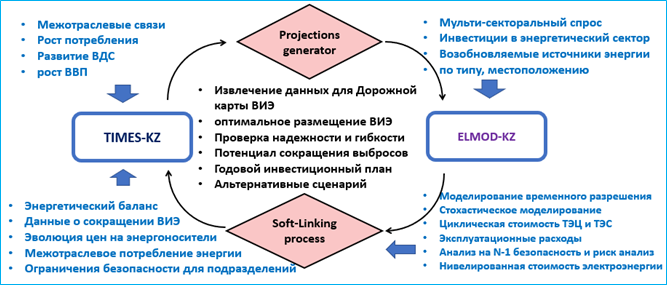
Fig. 1. Proposed model linkage. Author-developed scheme.
Expected Results
The main outcome of this research is a renewable energy roadmap for Kazakhstan, including data on optimal geographical placement, construction timelines, and investment volumes, taking into account the renewable energy potential and energy demand of each region. The developed integrated tool can also be used for other energy and environmental strategies.
This research is important not only for the Kazakhstani community but also for the global scientific community, as it presents a methodology for linking spatially disaggregated models and considers the relationship between the integration of renewable energy sources and district heating, which is particularly important in countries with long and severe winters.
Hybrid Modeling of Smart Energy Systems
Researchers from AITU, in collaboration with scientists from Turkey (Gazi University) and the United Kingdom (The University of Edinburgh), have published an article in the high-ranking journal «Energies» (https://doi.org/10.3390/en15072404 ), indexed in the Scopus database (CiteScore Q1, 85th percentile) with an Impact Factor of 3.004. The study uses modeling methods to investigate and propose an efficient approach to electricity management in a microgrid. The task is complicated by the presence of agents representing intermittent renewable energy sources, battery storage systems, electric vehicles, and consumers. The paper identifies the limitations of existing methods and proposes a new framework for the optimal integration of transactive energy into a smart energy system, including an auction-based algorithm. The system is modeled as a virtual power plant based on a day-ahead market and a balancing market among agents that regulate profits and energy imbalances within the system.
The research results demonstrate that auction-based markets can be used for optimal dispatch, congestion management, and minimization of system costs. A method for congestion reduction is proposed, taking into account incentives for key agents participating in the transactive energy network. The results also show that a multi-agent approach enables energy resource owners to form and participate in local energy markets.
This international research (Kazakhstan, Turkey, United Kingdom) was funded by the Ministry of Education and Science of the Republic of Kazakhstan (grant AP09261258). The authors express their gratitude to the Islamic Bank internship program and the Royal Academy of Engineering research exchange program.
Further details can be found in the open-access article: Amanbek, Y., Kalakova, A., Zhakiyeva, S., Kayisli, K., Zhakiyev, N., & Friedrich, D. (2022). Distribution Locational Marginal Price Based Transactive Energy Management in Distribution Systems with Smart Prosumers—A Multi-Agent Approach. Energies, 15(7), 2404. https://doi.org/10.3390/en15072404 ISSN: 1996-1073
The main outcome of this research is a renewable energy roadmap for Kazakhstan, including data on optimal geographical placement, construction timelines, and investment volumes, taking into account the renewable energy potential and energy demand of each region. The developed integrated tool can also be used for other energy and environmental strategies.
This research is important not only for the Kazakhstani community but also for the global scientific community, as it presents a methodology for linking spatially disaggregated models and considers the relationship between the integration of renewable energy sources and district heating, which is particularly important in countries with long and severe winters.
Hybrid Modeling of Smart Energy Systems
Researchers from AITU, in collaboration with scientists from Turkey (Gazi University) and the United Kingdom (The University of Edinburgh), have published an article in the high-ranking journal «Energies» (https://doi.org/10.3390/en15072404 ), indexed in the Scopus database (CiteScore Q1, 85th percentile) with an Impact Factor of 3.004. The study uses modeling methods to investigate and propose an efficient approach to electricity management in a microgrid. The task is complicated by the presence of agents representing intermittent renewable energy sources, battery storage systems, electric vehicles, and consumers. The paper identifies the limitations of existing methods and proposes a new framework for the optimal integration of transactive energy into a smart energy system, including an auction-based algorithm. The system is modeled as a virtual power plant based on a day-ahead market and a balancing market among agents that regulate profits and energy imbalances within the system.
The research results demonstrate that auction-based markets can be used for optimal dispatch, congestion management, and minimization of system costs. A method for congestion reduction is proposed, taking into account incentives for key agents participating in the transactive energy network. The results also show that a multi-agent approach enables energy resource owners to form and participate in local energy markets.
This international research (Kazakhstan, Turkey, United Kingdom) was funded by the Ministry of Education and Science of the Republic of Kazakhstan (grant AP09261258). The authors express their gratitude to the Islamic Bank internship program and the Royal Academy of Engineering research exchange program.
Further details can be found in the open-access article: Amanbek, Y., Kalakova, A., Zhakiyeva, S., Kayisli, K., Zhakiyev, N., & Friedrich, D. (2022). Distribution Locational Marginal Price Based Transactive Energy Management in Distribution Systems with Smart Prosumers—A Multi-Agent Approach. Energies, 15(7), 2404. https://doi.org/10.3390/en15072404 ISSN: 1996-1073
Research Team Members
Nurkhat Zhakiyev holds a PhD in Physics. His main research areas focus on mathematical and computational modeling of physical processes, optimization methods, and modeling using GAMS and Wolfram Mathematica. https://www.mendeley.com/authors/56043145000/ https://orcid.org/0000-0002-4904-2047 https://publons.com/researcher/D-6159-2017/
Ruslan Omirgaliyev, Junior Researcher, holds a Master’s degree in Electrical Engineering.
Research interests: physics, mathematics, programming, data analytics.
Key publications related to the project:
Omirgaliyev, R., Salkenov, A., Bapiyev, I., Zhakiyev, N. (2021, December). Industrial Application of Machine Learning Clustering for a Combined Heat and Power Plant: A Pavlodar Case Study. In 2021 IEEE 5th International Conference on Information and Telecommunication Technologies and Radio Electronics (UkrMiCo).
Sotsial Zh., Zhakiyev N., Omirgaliyev R. Application of modeling and machine learning methods for optimal planning of CHP generating equipment composition. Proceedings of the Young Scientists Forum, Digital Kazakhstan section (September, 2021).
Yerbol Akhmetbekov received his doctoral degree from the Institute of Thermophysics of the Siberian Branch of the Russian Academy of Sciences (Novosibirsk Scientific Center). He holds a PhD in Technical Sciences and has experience in computational science, mathematics, and physics. He participated in the development of the Concept for Transition to a Green Economy adopted in 2013. He also worked on a project involving the development of a hybrid economic equilibrium model integrated with the TIMES model to assess the comprehensive impact of an emissions trading system on the national economy. https://www.mendeley.com/authors/36070493900/ (h-index = 4).
Aidana Kalakova holds a Master’s degree in Electrical and Computer Engineering from Nazarbayev University. She has experience as a research assistant at Nazarbayev University and conducted research on “Dynamic Energy Management in Smart Distribution Networks.” She specializes in applying machine learning algorithms to solve optimization problems in power system management. She also has practical experience in projects related to energy storage systems and smart homes. https://www.mendeley.com/authors/57204639045/
Aidyn Bakdolotov (executor), Senior Researcher at JSC “Institute for Economic Research,” holds a Master’s degree in Energy from Purdue University (USA). He has experience in energy modeling and is responsible for completing stages 2 and 3 and disseminating results. He is an expert in energy efficiency and energy economics. Part-time involvement. https://www.mendeley.com/authors/56405546400/ (h-index = 3).
Nurkhat Zhakiyev holds a PhD in Physics. His main research areas focus on mathematical and computational modeling of physical processes, optimization methods, and modeling using GAMS and Wolfram Mathematica. https://www.mendeley.com/authors/56043145000/ https://orcid.org/0000-0002-4904-2047 https://publons.com/researcher/D-6159-2017/
Ruslan Omirgaliyev, Junior Researcher, holds a Master’s degree in Electrical Engineering.
Research interests: physics, mathematics, programming, data analytics.
Key publications related to the project:
Omirgaliyev, R., Salkenov, A., Bapiyev, I., Zhakiyev, N. (2021, December). Industrial Application of Machine Learning Clustering for a Combined Heat and Power Plant: A Pavlodar Case Study. In 2021 IEEE 5th International Conference on Information and Telecommunication Technologies and Radio Electronics (UkrMiCo).
Sotsial Zh., Zhakiyev N., Omirgaliyev R. Application of modeling and machine learning methods for optimal planning of CHP generating equipment composition. Proceedings of the Young Scientists Forum, Digital Kazakhstan section (September, 2021).
Yerbol Akhmetbekov received his doctoral degree from the Institute of Thermophysics of the Siberian Branch of the Russian Academy of Sciences (Novosibirsk Scientific Center). He holds a PhD in Technical Sciences and has experience in computational science, mathematics, and physics. He participated in the development of the Concept for Transition to a Green Economy adopted in 2013. He also worked on a project involving the development of a hybrid economic equilibrium model integrated with the TIMES model to assess the comprehensive impact of an emissions trading system on the national economy. https://www.mendeley.com/authors/36070493900/ (h-index = 4).
Aidana Kalakova holds a Master’s degree in Electrical and Computer Engineering from Nazarbayev University. She has experience as a research assistant at Nazarbayev University and conducted research on “Dynamic Energy Management in Smart Distribution Networks.” She specializes in applying machine learning algorithms to solve optimization problems in power system management. She also has practical experience in projects related to energy storage systems and smart homes. https://www.mendeley.com/authors/57204639045/
Aidyn Bakdolotov (executor), Senior Researcher at JSC “Institute for Economic Research,” holds a Master’s degree in Energy from Purdue University (USA). He has experience in energy modeling and is responsible for completing stages 2 and 3 and disseminating results. He is an expert in energy efficiency and energy economics. Part-time involvement. https://www.mendeley.com/authors/56405546400/ (h-index = 3).
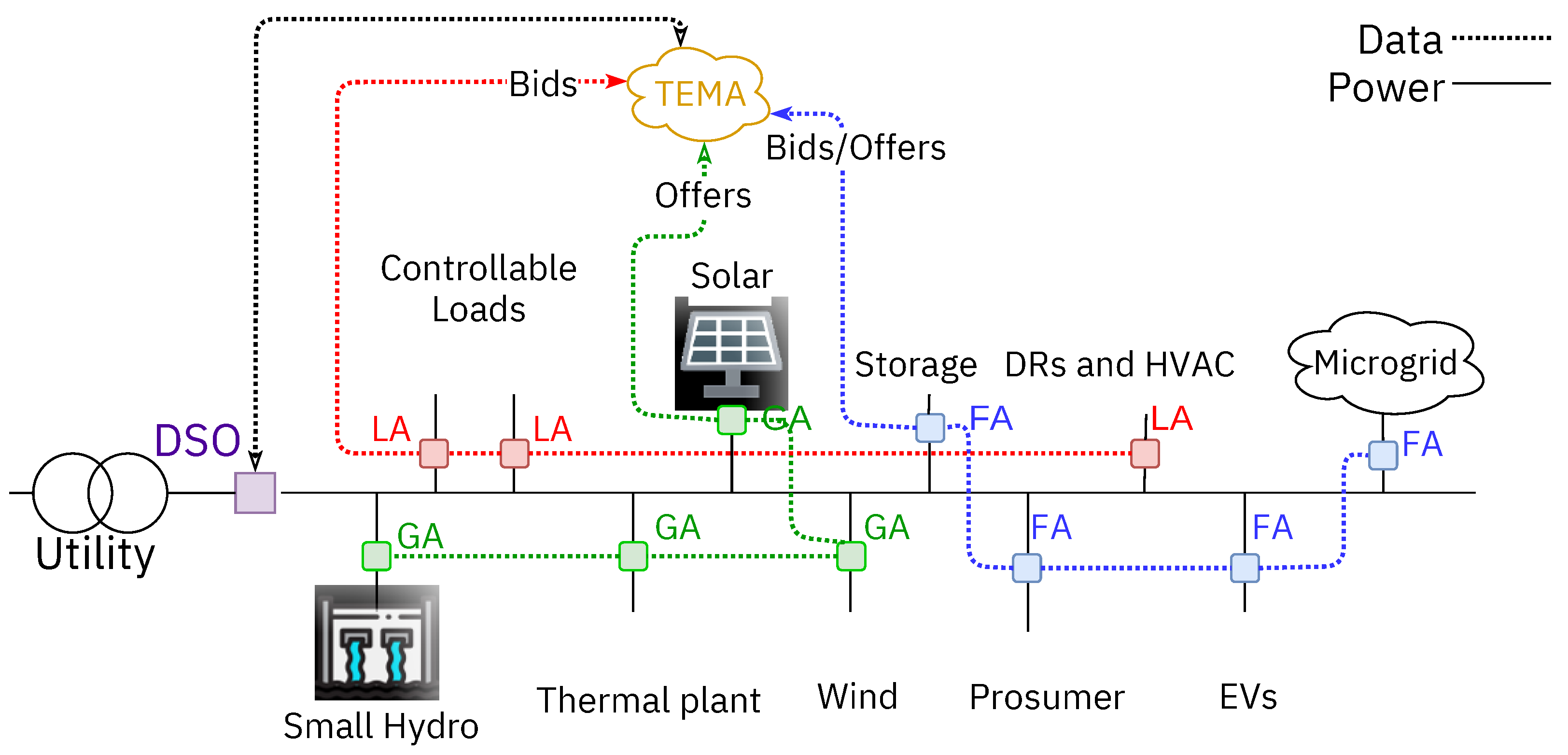
Fig. Studied 33-bus power system.
Selected Publications:
1. Zhakiyev N., Akhmetbekov Y., Silvente J., Kopanos G. Optimal Energy Dispatch and Maintenance of an Industrial Coal-Fired Combined Heat and Power Plant in Kazakhstan. 9th International Conference on Applied Energy, ICAE2017, 21-24 August 2017, Cardiff, UK. Energy Procedia, 2017. https://doi.org/10.1016/j.egypro.2017.12.187 (Q2)
2. Zhakiyev N., Otarov R. (2017). Scheduling and planning for optimal operations of power plants using a unit commitment approach. Sustainable Energy in Kazakhstan: Moving to Cleaner Energy in a Resource-Rich Country, 109, Routledge Taylor and Francis Group. (Scopus)
3. Kopanos G., Murele O.C., Silvente J., Zhakiyev N., Akhmetbekov Y., Tutkushev D. (2018). Efficient planning of energy production and maintenance of large-scale combined heat and power plants. Energy Conversion and Management, 169, 390-403. IF=5.589 (Q1)
4. Assembayeva M., Egerer J., Mendelevitch R., & Zhakiyev N. (2018). A spatial electricity market model for the power system: The Kazakhstan case study. Energy, 149, 762-778. https://doi.org/10.1016/j.energy.2018.02.011 (Q1)
5. Assembayeva M., Egerer J., Mendelevitch R., & Zhakiyev N. (2019). Spatial electricity market data for the power system of Kazakhstan. Data in Brief, 103781. https://doi.org/10.1016/j.dib.2019.103781 (Q3)
6. De Miglio R., Akhmetbekov Y., Baigarin K., Bakdolotov A., Tosato G.C. (2014). Cooperation benefits of Caspian countries in their energy sector development. Energy Strategy Reviews, 4, 52–60. (IF 1.2)
1. Zhakiyev N., Akhmetbekov Y., Silvente J., Kopanos G. Optimal Energy Dispatch and Maintenance of an Industrial Coal-Fired Combined Heat and Power Plant in Kazakhstan. 9th International Conference on Applied Energy, ICAE2017, 21-24 August 2017, Cardiff, UK. Energy Procedia, 2017. https://doi.org/10.1016/j.egypro.2017.12.187 (Q2)
2. Zhakiyev N., Otarov R. (2017). Scheduling and planning for optimal operations of power plants using a unit commitment approach. Sustainable Energy in Kazakhstan: Moving to Cleaner Energy in a Resource-Rich Country, 109, Routledge Taylor and Francis Group. (Scopus)
3. Kopanos G., Murele O.C., Silvente J., Zhakiyev N., Akhmetbekov Y., Tutkushev D. (2018). Efficient planning of energy production and maintenance of large-scale combined heat and power plants. Energy Conversion and Management, 169, 390-403. IF=5.589 (Q1)
4. Assembayeva M., Egerer J., Mendelevitch R., & Zhakiyev N. (2018). A spatial electricity market model for the power system: The Kazakhstan case study. Energy, 149, 762-778. https://doi.org/10.1016/j.energy.2018.02.011 (Q1)
5. Assembayeva M., Egerer J., Mendelevitch R., & Zhakiyev N. (2019). Spatial electricity market data for the power system of Kazakhstan. Data in Brief, 103781. https://doi.org/10.1016/j.dib.2019.103781 (Q3)
6. De Miglio R., Akhmetbekov Y., Baigarin K., Bakdolotov A., Tosato G.C. (2014). Cooperation benefits of Caspian countries in their energy sector development. Energy Strategy Reviews, 4, 52–60. (IF 1.2)
Results
1. S. Zhakiyeva, M. Gabbassov, Y. Akhmetbekov, G. Akybayeva and N. Zhakiyev, «The Development of a Risk Assessment Modeling for the Power System of Kazakhstan,» 2021 IEEE International Conference on Smart Information Systems and Technologies (SIST), 2021, pp. 1-4, doi: 10.1109/SIST50301.2021.9465892. (indexed in IEEE, Scopus, WoS. Quartile-NA, CiteScore-NA)
2. Amanbek Y., Kalakova A., Zhakiyeva S., Zhakiyev N., Fridrich D. «Distribution-LMP based Transactive Energy Management in Distribution Systems with Smart Prosumers — A Multi-Agent Approach» IEEE Transactions on Smart Grid (2021, Submitted, ISSN 1949-3053)
3. Zhakiyeva, S., Mukatov, B., Nassirkhan, R., & Zhakiyev, N. (2020, November). The Network Reliability Assessment and Risk Prevention Measures for the Power System of Kazakhstan Due to High Renewables. In 2020 IEEE 2nd International Conference on Advanced Trends in Information Theory (ATIT) (pp. 154-157). IEEE. (indexed in IEEE, Scopus, WoS. Quartile-NA, CiteScore-NA)
4. B. Sarsembayev, D. Zholtayev, and Ton Duc Do, Maximum Power Tracking of Variable-Speed Wind Energy Conversion Systems based on a Near-Optimal Servomechanism Control System // Optimal Control Applications and Methods (ISSN: 0143-2087, Q2), (2021, Submitted).
1. S. Zhakiyeva, M. Gabbassov, Y. Akhmetbekov, G. Akybayeva and N. Zhakiyev, «The Development of a Risk Assessment Modeling for the Power System of Kazakhstan,» 2021 IEEE International Conference on Smart Information Systems and Technologies (SIST), 2021, pp. 1-4, doi: 10.1109/SIST50301.2021.9465892. (indexed in IEEE, Scopus, WoS. Quartile-NA, CiteScore-NA)
2. Amanbek Y., Kalakova A., Zhakiyeva S., Zhakiyev N., Fridrich D. «Distribution-LMP based Transactive Energy Management in Distribution Systems with Smart Prosumers — A Multi-Agent Approach» IEEE Transactions on Smart Grid (2021, Submitted, ISSN 1949-3053)
3. Zhakiyeva, S., Mukatov, B., Nassirkhan, R., & Zhakiyev, N. (2020, November). The Network Reliability Assessment and Risk Prevention Measures for the Power System of Kazakhstan Due to High Renewables. In 2020 IEEE 2nd International Conference on Advanced Trends in Information Theory (ATIT) (pp. 154-157). IEEE. (indexed in IEEE, Scopus, WoS. Quartile-NA, CiteScore-NA)
4. B. Sarsembayev, D. Zholtayev, and Ton Duc Do, Maximum Power Tracking of Variable-Speed Wind Energy Conversion Systems based on a Near-Optimal Servomechanism Control System // Optimal Control Applications and Methods (ISSN: 0143-2087, Q2), (2021, Submitted).